
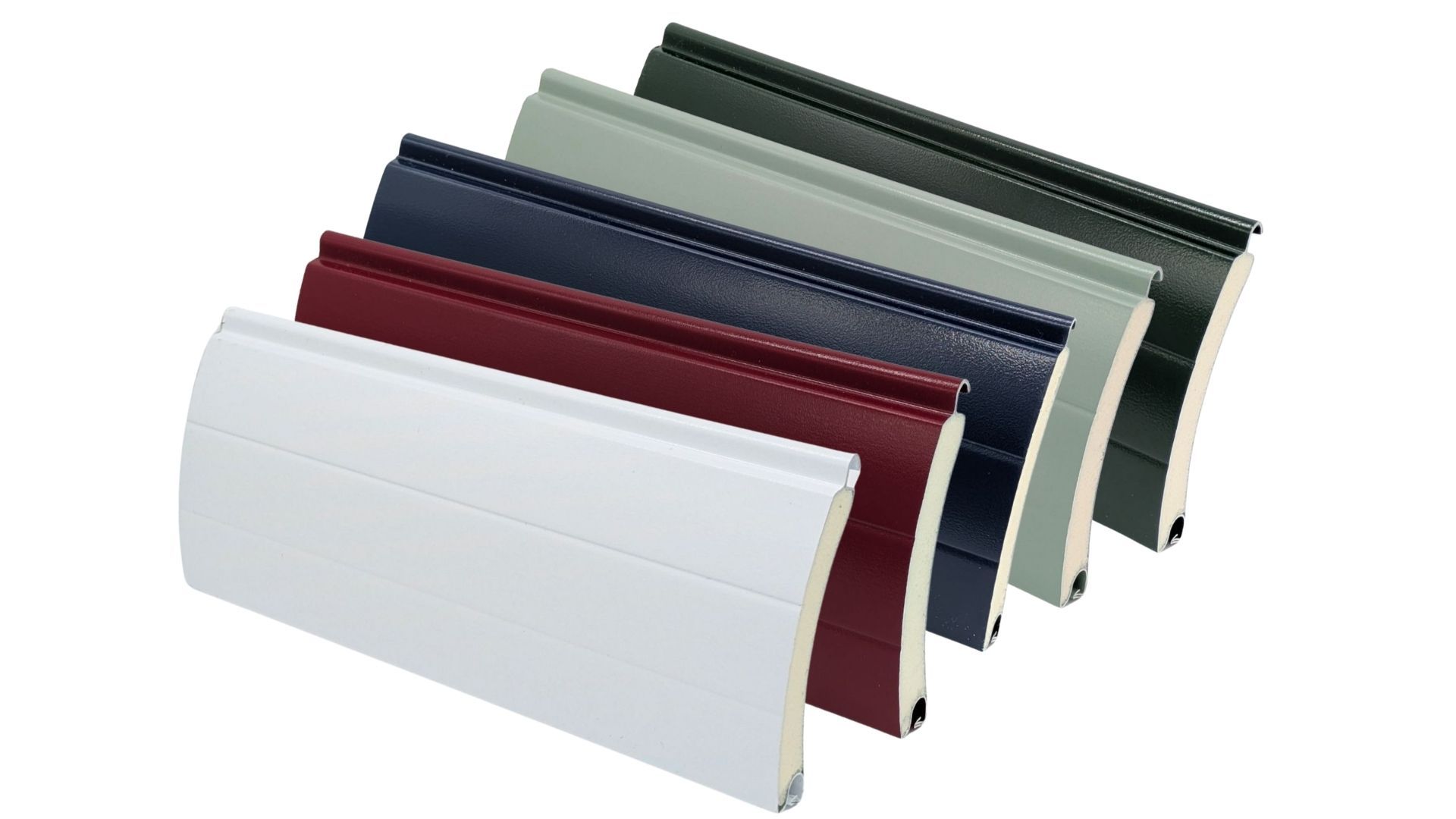
Garage doors make up a huge proportion of a property’s façade; on a typical home, they comprise around a third of the visual space. It follows that your garage door contributes a great deal towards the overall style and kerb appeal of your home. You can therefore think of your garage door as a huge canvas on which you can make a big impression.
But it needs to make the right impression! Choosing the right shade for your garage door isn’t simply a matter of choosing your favourite colour or matching with next door’s; you need to create architectural harmony with the rest of your property.
It’s an important choice: the right colour will fit seamlessly into your property’s style - adding to the overall look of your home, and even increasing perceived value. On the other hand, a garage door colour that clashes with your brickwork and windows can ruin your house’s appearance and make it stick out on the street like a sore thumb.
But where to start? With so many different garage door colours and styles to choose from, you could be forgiven for feeling a little overwhelmed! Bold or subtle? Blend in or stand out?
Having built and installed a fair few (!) garage doors in our time, we know what works well, and what pitfalls you need to avoid when choosing your garage door colour. In this guide, we uncover some key design principles, look at some modern colour trends, and address the elephant in the room: should your garage door match your front door?
Understanding Exterior Design
There is a simple design framework, known as “The Rule of Three”, which is a useful principle to follow when deciding how you want your property to look. Professional designers use this framework to create a balanced appearance to the exterior of a property.
1. Body (Dominant colour): The primary colour of your house occupying the biggest visual space - whether brick, stone or render.
2. Trim (Secondary colour): Fascia, window frames, soffits and - often - the guttering. Typically white, cream or grey.
3. Accent (Tertiary colour): A colour used sparingly to draw the eye to certain features - for example the front door or shutters.
So where does the garage door fit?
With the garage door making up such a large part of your property’s exterior, there are two main schools of thought when it comes to choosing its colour.
You can either:
Match the colour of your windows / fascia to create design harmony, making the garage appear like a natural extension of the house structure. This also avoids your colour choice from overwhelming the façade.
OR
Choose a bold choice of colour - different from any other on the house, to make the garage stand out. This often works best when the garage is either set back from the house, or when the rest of the house is monotone.
Should Garage Doors Match Your Front Door?
The big question! And there’s no right or wrong answer; it all depends on the layout of your property, and what kind of statement you wish to make with your new garage door. But here’s what you might want to think about when choosing whether to “match” or “contrast”.
Why Match?
Matching colours on your property creates a sense of unity and cohesion - even, dare we say it - sophistication. Matching shows intentionality in design and colour scheme, and neatly ties visible entrances together in a unified fashion, as well as giving your property a tidy presentation.
Why Contrast?
Some front doors deserve to be shown off! If you have a particularly elegant front door, you’ll want to make it stand out; matching with your garage door inevitably detracts attention. Similarly, if your front door is right in the centre of your property, choosing a contrasting colour for your garage door may be a good idea for the sake of a symmetrical aesthetic. If you want your front door to be the main focal point of your home, your garage door needs to take a back seat. However, you can still maintain a sense of visual unity by matching it with the colour of your home’s window frames.
It’s also worth noting that a particularly bright shade on a surface as large as a garage door can be visually overwhelming, so matching your garage and front door may not always be appropriate; instead, a neutral or blending colour may work better.
Our Verdict
Matching your garage and front doors can create a prestigious feel to the front of your home, but only if the colour isn’t too overpowering. If in doubt, you can’t go wrong by matching your garage door to your window frames.
Property Architecture and Colour Psychology
When choosing a colour for your garage door, one of the most important considerations is the age and style of your home. Keep in mind that a bold colour that suits a modern new build may jar with the architecture of a Victorian semi-detached house. The best garage door colours deliver the desired aesthetic impression, adding kerb appeal to the property, whilst honouring the property’s architecture as a whole. Now let’s take a look at some popular colour choices (from Garolla’s colour palate), and explore what impression / aesthetic they present, and what style / property type they are most suitable for.
Modern Minimalist: Black / Anthracite
1. The Modern, Minimalist Look: Anthracite and Black
Dark grey and black garage doors offer a sense of contemporary sophistication, often suiting modern architectural styles. You will find many new builds and those rendered in pale colours feature a dark garage door. Anthracite grey is now one of the most popular choices for garage doors and house renovations - and for good reason. It contrasts sharply against pale rendering or white window frames, but it’s not as harsh as pure black. Furthermore, the colour hides dirt well, giving your garage door a striking finish.
2. Safe and Classic: White, Cream and Ivory
Cream, ivory and white garage doors offer a clean and fresh appearance - perfect for more traditional homes, or those where the trim (window frames, fascias etc.) is already the same colour. White is the perfect hue to minimise the visual impact of your garage door, helping it to blend into the background. This is especially useful if you have a very large garage door, and want to draw attention elsewhere. Ivory and cream are softer, warmer alternatives - perfect for a more classic aesthetic.
3. Heritage: Chartwell Green and Deep Blues
The muted Chartwell Green (named after Winston Churchill’s country home), and deep blues provide heritage charm and a sense of refinement. These colours are perfect for garage doors in country cottages and period homes.
4. The Natural Look: Wood Grain Effects
For properties featuring existing timber elements, a high quality wood-effect garage door may be the perfect option to bring harmony and warmth to the entire property. A mock wood garage door provides the elegance of timber without the need for regular maintenance.
5. Making a Statement: Purple Red
There’s nothing like a bold red to evoke a sense of confidence and energy. A deep shade of red brings inviting warmth to a property, creating a focal point on the property. This colour often works best on properties with otherwise muted colour palettes, and those that need an injection of personality. However, it’s worth bearing in mind that using such bold colours may be too much on a large or double garage door.
Thinking Practically: It’s Not Just About Aesthetics
You may want to think beyond the look of your garage door when choosing its colour. Your choice brings with it practical considerations too - including lighting, maintenance and longevity.
Maintenance and Visibility
The colour choice for your new garage door will dictate how quickly dirt and cobwebs show up, and how frequently you need to clean it. Naturally, light colours show up grime much more quickly and easily. Maintaining their appearance requires more frequent cleaning. Black and anthracite are great at hiding dirt and dust, but they can highlight lighter particles such as pollen or salt deposits in coastal locations.
Lighting Conditions
It’s worth bearing in mind that your choice of garage door colour will look different depending on the time of day (and year), as well as the direction your house faces.
For north-facing houses, the light is cooler and bluer, meaning grey doors can appear more metallic, whilst warmer colours become more muted.
For south-facing homes, the light is warmer and more intense. Essentially, this makes colours seem lighter and brighter than they actually are.
However, how light affects the appearance of your garage door depends on the material and surface texture of your garage door. Garolla roller garage doors have a textured surface, which diffuses light. This ensures your garage door colour remains stable and true to the colour you picked all year round.
Sun and Heat Exposure
Dark colours absorb more heat, and this causes issues with bubbling and warping with older garage doors. Thankfully, the use of modern garage door materials means this issue is largely a thing of the past. Manufactured using double-skinned aluminum slats with insulating foam, Garolla garage doors are extremely temperature stable, and resistant to thermal expansion. Furthermore, their high quality finish and powder coating resists sun damage and fading.
Factory Finish vs. DIY Painting
When choosing to change the colour scheme of their garage door, people are faced with the question of whether to DIY, or if it would be more cost-effective in the long run to buy a new garage door with a professional factory finish.
A DIY approach, using hardware store garage door paint comes with significant risks - particularly if painting a roller garage door.
Naturally a DIY finish is rarely as good as a professional finish, and this can lead to an inconsistent aesthetic, as well as the risks of bubbling and flaking. Metal garage doors expand and contract with changing temperatures, meaning it’s often not long before DIY garage door paint jobs start to peel and flake.
In the case of roller garage doors, this type of door relies on precise engineering. Applying paint increases the thickness of the slats, and this can cause jamming or costly damage which may necessitate replacing the garage door altogether.
With a factory-bonded, powder coated finish, Garolla garage doors are painted using an electrostatic process; this ensures the colour is directly fused to the metal. This ensures an incredibly durable, finish. Choosing a new, pre-painted garage door is almost always a better long-term investment than attempting to paint an old one.
Transform Your Garage Door; Transform Your Home
Your garage door is a long-term investment, and should be built to last. Therefore it’s important to spend some time choosing the right colour for it, and indeed whether or not repainting your old garage door is the right decision.
There’s lots to think about - the age and architectural style of your property; the rest of the street; your windows… And that’s not to mention the age of your existing garage door, as well as the level of convenience, safety and security it provides.
The right colour will not only transform your garage, it will transform the appearance and character of your entire property.
Whether you’re looking for a sleek and modern tone, or a soft and elegant hue, modern garage doors come in a wide variety of colours and styles.
With an extensive range of durable colours, Garolla roller garage doors offer style and substance; they are built to last, and designed with modern convenience in mind.
Is it time to enhance your property’s kerb appeal - without needing to pick up a paintbrush?
Download the Garolla brochure to find the perfect garage door and shade for your home.
