
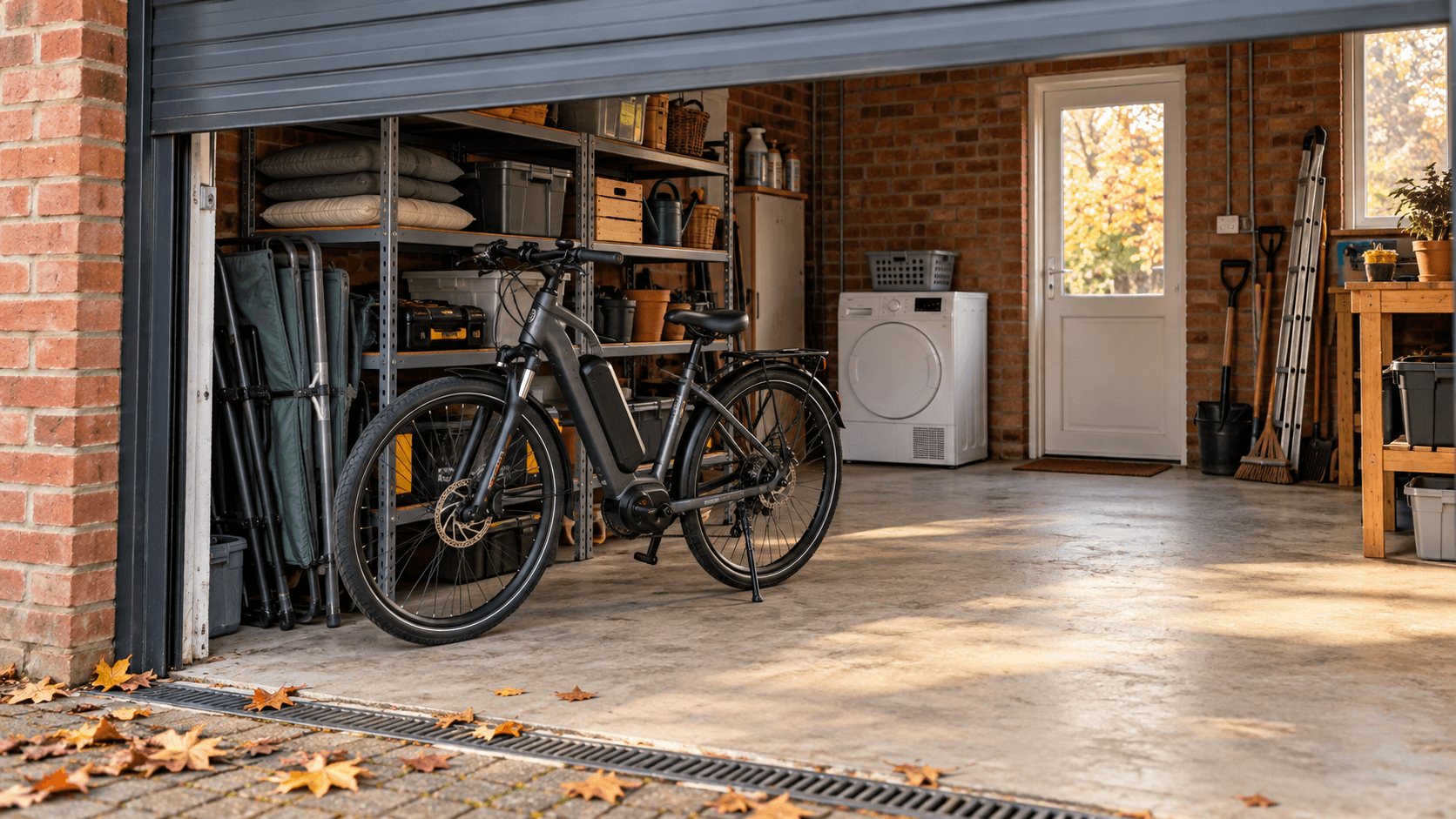
Autumn is when garages fill up. Garden furniture, BBQ equipment, e-bikes, scooters and tools all get packed away for winter — often in the same space as a tumble dryer, freezer or boiler.
With batteries, electrical appliances and flammable materials stored together, a fault can have serious consequences. And because garages are often out of sight and out of mind, smoke, unusual smells or overheating equipment can go unnoticed.
“Garages are one of the hardest-working spaces in the home, but they're often overlooked from a safety perspective,” says Alastair Mayne, CEO at Garolla.
Before the clocks go back, take some time to check how you store, charge and use equipment in your garage. These six garage fire safety checks are a useful place to start.
1. Avoid charging batteries overnight or when nobody’s home
Cheaper overnight electricity can make it tempting to plug in an e-bike or scooter before bed. However, charging while you’re asleep means you may miss the early signs of a battery failure.
Charge only while you’re awake and at home, following the manufacturer’s instructions. Use the charger supplied with the device or a replacement authorised by the manufacturer, and unplug it once charging is complete.
Allow a battery to cool after use before charging it, and never cover the battery or charger.
2. Keep charging areas clear of flammable materials
Paint tins, fuel containers, furniture cushions and cleaning products often end up stored in the garage. If a battery or charger fails nearby, these materials can help a fire spread.
Choose a clear charging area away from combustible materials, and follow the manufacturer’s guidance on suitable surfaces and conditions. Avoid charging in excessively hot, cold or damp areas.
Keep batteries and chargers away from exits too. A fire should never block the route you need to escape.
3. Take care with tumble dryers and electrical appliances
Garages can be convenient places for household appliances, but safe installation and regular maintenance still matter.
Plug large appliances directly into a suitable wall socket rather than an extension lead, and avoid overloading sockets. Check the manufacturer’s instructions to make sure your appliance is suitable for the temperatures and conditions in your garage.
For tumble dryers and washing machines, avoid running them while you’re asleep or away from home. Clean your tumble dryer’s lint filter after every load and keep ventilation openings clear.
If an appliance develops a burning smell, unusual noise or signs of overheating, stop using it and contact the manufacturer or a qualified repair professional. It’s also worth checking for product recalls and registering your appliances so manufacturers can contact you about safety issues.
4. Fit suitable alarms and test them regularly
A fire in a garage may develop before anyone inside the house notices. Suitable fire detection can help provide an earlier warning.
Government battery safety guidance recommends heat alarms for garages, alongside working smoke alarms elsewhere in the home. Interlinked alarms can alert people in other rooms when one alarm activates.
If your garage contains a boiler or another fuel-burning appliance, consider carbon monoxide protection too. Carbon monoxide cannot be seen or smelled, and a carbon monoxide alarm serves a different purpose from a fire alarm.
Ask your local fire and rescue service for advice on suitable alarms, and follow the manufacturer’s instructions for installation, testing and replacement.
5. Check batteries, chargers and cables for warning signs
Damaged batteries and charging equipment can pose a fire risk. Look out for:
- Swelling, bulging or damage to the battery casing
- Unusual or excessive heat
- Leaking
- Strong chemical smells
- Hissing or cracking sounds
- Frayed, split or damaged cables
If you notice these signs, stop using the equipment and contact the manufacturer or retailer for advice. Don’t attempt to repair a damaged battery yourself or put it in your household rubbish.
If a battery begins to smoke or catches fire, get out immediately, raise the alarm and call 999. Do not attempt to tackle the fire yourself.
6. Reduce clutter and keep escape routes clear
When outdoor belongings come inside for winter, it’s easy for the garage to become a catch-all storage space. Too much clutter can hide hazards, obstruct exits and give a fire more material to spread through.
Use shelving to organise belongings, keep walkways clear and leave space around appliances and charging equipment. Avoid blocking vents, sockets or access to the garage’s exits.
A seasonal tidy-up also makes it easier to spot damaged cables, leaks and other problems before they get worse.
Make garage safety part of your autumn routine
You don’t need to wait for something to go wrong to check your garage. Clear charging areas, well-maintained appliances and suitable alarms can all help reduce risk.
As Alastair explains: “Taking a few simple precautions now is far easier than dealing with the damage, disruption and expense that can follow a garage fire.”
