
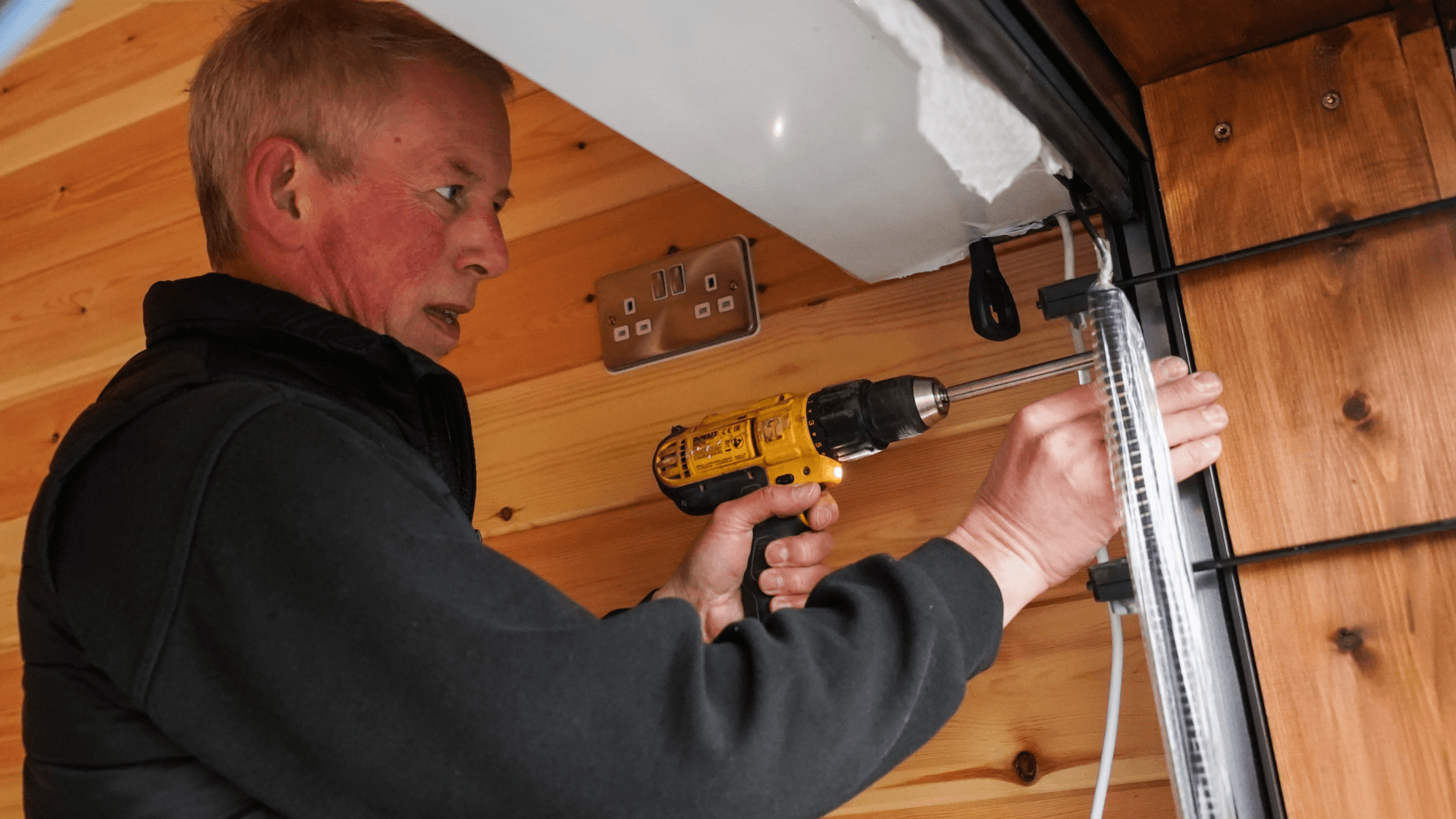
Whether you're creating a home gym, music studio, workshop or cinema room, soundproofing your garage can help reduce noise, improve acoustics and create a more comfortable space.
The most effective garage soundproofing combines four key elements: sealing gaps, adding insulation, increasing wall and ceiling mass, and upgrading to an insulated garage door. While no garage can be made completely soundproof, the right improvements can dramatically reduce noise transmission and echo.
Key Takeaways
- Soundproofing and acoustic treatment are not the same thing.
- Garage doors are often the biggest source of sound leakage.
- Insulated roller garage doors help reduce sound transfer.
- Walls, ceilings and floors should be treated together for best results.
- Sealing air gaps is one of the most cost-effective improvements.
- The best solution depends on how you use your garage.
The garage is an unusual part of the home: whereas most rooms in a home are named for their intended purpose, the garage no longer has a predefined role, instead offering a flexible space for a variety of different pursuits. Homeowners are increasingly converting their garage to a practical extension of their home, rather than a place just to store the lawnmower and assorted junk. From home cinemas and workshops to gyms and band rehearsal spaces, the garage offers an ideal space for many different hobbies - especially ones that are too loud to practice in the family home! However, having the space to perform your noisy hobby often comes with a caveat: the neighbours.
Typically comprising hard floors and brick walls, and often fitted with a thin metal door, regular garages amplify the sound within and project it to the outside world. They also create an echo-chamber effect, which poses a very real problem for situations where having a space with good acoustic properties is crucial.
If you are planning a garage conversion or are looking to use the space to pursue your hobbies without upsetting your neighbours, it is crucial that you understand the best way to soundproof a garage.
In this guide, we walk you through indoor acoustic management - from soundproofing garage walls to the importance of quality sound insulation for garage door systems. You will learn how to turn an echo chamber into your very own bespoke sanctuary with great acoustics and total exterior silence.
Understanding the Science Behind Acoustics
Before planning your garage’s acoustic transformation, it’s important to understand that effective soundproofing actually comprises a two-step process. People often confuse sound absorption with sound insulation, and this can lead to costly design errors. Let’s take a look at what each term actually means.
Sound Absorption
You can think of sound absorption as internal sound control; it manages how sound behaves inside a room. If you stand in an empty, hard-walled garage and clap your hands, you will hear what’s known as a “flutter echo”, as the sound bounces around the room. Installing soft, porous materials on the walls (e.g. foam panels), and floor (e.g. modular rubber tiles) helps the garage sound better on the inside. However, it does very little to prevent the noise from escaping the four walls and reaching your neighbours.
Sound Insulation
Effective sound insulation stops sound from leaving, and indeed entering a space. This requires mass and air-sealing. Sound behaves in a similar way to water in the sense that it will escape through the smallest gap - be that under a door, through an air vent or through a thin wall. If you are to achieve true garage sound insulation, you need to carefully assess every inch of the structure, before adding density to it and eliminating air gaps. Doing this helps to create a quiet environment for the neighbourhood.
Soundproofing Garage Walls and Ceilings
Garage walls typically consist of a single brick layer or breeze blocks; both materials are solid, yet porous to noise, in particular low-frequencies such as bass guitars and heavy machinery. In order to create a truly soundproofed garage, you need to implement a concept known as “decoupling”.
A "Room Within a Room"
The most effective method of “decoupling” is to build a secondary internal frame within the garage itself. Building a stud wall that has no contact with the existing wall creates an air barrier, breaking the path of vibration and significantly reducing the escape of noise.
For best results you should add high-density acoustic mineral wool inside the stud walls. Acoustic wool is much more effective than standard thermal insulation as its material properties are specifically designed to trap sound waves. Installing acoustic plasterboard over the top of the stud walls adds further density to block sound.
Managing the Ceiling
Adding acoustic insulation to your ceiling is a vital consideration, particularly if your garage sits beneath a living space. To avoid the transfer of noise between the spaces, installing “resilient bars” to the existing ceiling is the most effective solution. Resilient bars are thin metal strips that effectively “suspend” the plasterboard beneath the ceiling joists; this creates a small air gap that hugely limits the passage of sound. This is the best way to soundproof a garage ceiling effectively. However, you can further enhance this method by adding acoustic wool between the ceiling joists themselves.
Sound Insulation for Garage Doors
It doesn’t matter how well insulated your walls are if you have a cheap, single-skin metal garage door. You can think of such a garage door like a drum skin; it vibrates and amplifies noise, transmitting it to the outside world with great effect.
The Problem with Garage Door Gaps
We mentioned previously that sound acts in a very similar way to water. Traditional garage doors often have gaps at the sides and bottom for clearance. These gaps offer a high level of acoustic leakage, and creating an effective “air seal” to avoid these gaps is the most effective step in garage door sound insulation.
The Solution: Insulated Roller Doors
The design and operation of more traditional garage doors - especially up-and-over - makes it nigh-on impossible to effectively manage sound transfer. If you are looking at converting your garage but have an old, single-walled door, it’s worth seriously considering a modern upgrade in the form of a high-quality roller garage door.
For example, Garolla garage doors comprise double-skinned aluminum slats that are pressure-filled with high-density polyurethane foam. This forms a “sandwich” construction that is extremely effective at dampening sound; the foam acts as a decoupler, breaking the path of vibration.
Garolla roller garage doors run on horizontal guide rails with integrated brush seals, and feature a heavy-duty rubber seal at the bottom. These features virtually eliminate air leaks that would otherwise allow sound to permeate and pour out onto the driveway.
Of course, no garage door is completely soundproof. However, an insulated roller garage door provides - by some distance - the best level of sound insulation when compared with other types.
How to Soundproof a Garage Floor
A hard floor is a major conductor of low-frequency sound, allowing vibrations to travel into the ground and to neighbouring houses. If you are intending to use your garage for band rehearsals or for operating heavy duty machinery, you’ll want to make sure your floor is well-insulated too.
Like a well-insulated ceiling, effective floor insulation demands the concept of “floating”. This can be achieved by installing high-density rubber matting across the surface. If you are using the garage as a room for music rehearsals, you may wish to add an additional layer of plywood over the rubber to create a stable acoustic surface. This method breaks the direct contact between the noise source and the concrete floor, effectively preventing the vibrations from leaving the room.
Garage Windows and Side Doors
Many garages have a side window or pedestrian door. When insulating your garage, these points of weakness are often forgotten about. Let’s take a look at what you can do to minimise sound transfer.
Windows
If having natural light in your garage isn’t a priority, the best way way to soundproof garage door windows is to board them up; use a dense timber plug filled with acoustic insulation - ideally specialist wool. If however, you want to keep the window, add a secondary glazing unit (ideally with a significant air gap) between the panes.
Pedestrian Doors
Timber doors offer very poor levels of sound insulation. Adding an insulative layer of mass-loaded vinyl (MLV) to the back of the door is an effective way of improving its soundproofing qualities. Alternatively, you could hang a heavy acoustic-grade curtain over the door. Don’t forget about the gaps around the door frame; install rubber weather strips around the perimeter of the door to eliminate air gaps.
How to Ventilate a Soundproofed Garage
Successfully soundproofing your garage is essentially making your garage airtight; great for noise control, but dangerous too, and leaving the space susceptible to damp and mould. It’s therefore critical to ensure good airflow.
Installing a standard air vent in a newly soundproofed garage is tantamount to spending a fortune on double glazing and then leaving your front door wide open; the sound will simply pour through the vent, undoing all of your hard work.
Instead, we recommend having an “acoustic baffle” (also known as a sound maze) installed. This is a box lined with sound-absorbing foam that works by forcing air to take a zig-zag path through it. This provides good ventilation to your garage, with sound waves being absorbed by the foam at every turn. An acoustic baffle provides a small yet essential part of any garage sound insulation project.
How to Improve Garage Interior Acoustics
So, you have stopped sound from escaping (and entering) your garage. Now it’s time to make the room actually sound good. No matter how well insulated it is, an empty garage acts like an echo-chamber; your voice or music will bounce back at you, creating a poor acoustic effect.
Adding sound-absorbing materials to the garage surfaces is an effective way to avoid this, creating a perfect space to play music or watch films. Foam acoustic tiles are a popular option because they offer a very cost-effective solution, and stick to the walls with minimal fuss. However, they are only truly effective at managing higher frequency sounds. For an acoustically balanced room, you might want to consider adding “bass traps” in the corners. Low-frequency sound waves gather in corners; bass traps - usually made up of acoustic wool or thick blocks of foam - are effective at absorbing these waves, and help to create balanced internal acoustics.
What Makes a Garolla Door Effective?
When looking for the best way to soundproof a garage, the garage door is rarely the primary focus of a homeowner’s attention. People often look to retrofit their existing doors by installing matting or insulative panels. However, there are two main issues here. The first is weight. Garage door springs and motors are calibrated for the weight of the metal alone; given the large surface area, adding even a small amount of soundproofing material can make the door dangerous or cause the motor to fail. The second issue: adding insulation to a garage door doesn’t solve the air gap issue; the perimeter of your door will still allow significant sound transfer, leaving your efforts in vain!
Garolla insulated roller doors are designed with sound (and thermal) insulation in mind. Sound-dampening is an inherent part of the design, and you benefit from:
- Double-skinned slats: Extra density; enhanced insulation
- High density foam: Slats are filled with polyurethane foam - a material boasting exceptional sound absorption properties.
- Ceiling Space: On opening, Garolla doors roll vertically into an overhead box. This means there is no need for tracks inside the garage, not only maximising the available internal space, but also allowing you to install a full acoustic ceiling.
Peace of Mind (and Ears!) for You and Your Neighbours
Soundproofing a garage is a project completed in stages. No single action - be that adding soundproof garage walls or insulating the ceiling - will suffice in isolation. The overarching aim is to essentially create a bubble around the garage interior, providing the perfect space for all manner of hobbies and activities.
A high-quality insulated garage door allows you to seal the largest gap whilst providing extra convenience and security. Then, by taking steps to decouple your walls and floor, you can claim your new, improved space, and not have to worry about the neighbours! Whether you have some woodworking projects in mind, want to take up drumming or fancy a movie night, proper garage sound insulation elevates the experience for all.
Don’t let an outdated garage door stop you from enjoying your creative time; instead, invest in the right materials and minimise gaps to enjoy the silent satisfaction of a job well done!
The garage door is often the weakest point in any soundproofing project. Even if your walls and ceiling are insulated, sound can escape through thin door panels and gaps around the frame.
Modern insulated roller garage doors help reduce sound transfer by combining insulated aluminium slats with perimeter seals designed to minimise air leakage.
Garolla roller garage doors use double-skinned aluminium slats filled with polyurethane foam and feature brush seals and a heavy-duty bottom seal to help improve sound insulation compared to many traditional garage door designs.
Soundproofing a Garage for Different Uses
- Home Gym
Focus on rubber flooring and wall insulation.
Music Studio or Band Room
- Prioritise wall decoupling, acoustic wool and insulated doors.
Workshop
- Focus on vibration control and door insulation.
Home Cinema
- Prioritise acoustic treatment and ceiling insulation.
Frequently Asked Questions
No. However, you can significantly reduce noise transmission by sealing air gaps, increasing insulation and upgrading weak points such as garage doors and windows.
Sealing gaps, adding weather stripping and using rubber flooring can provide noticeable improvements without major building work.
No. Acoustic foam helps reduce echo but does not effectively stop sound escaping from the room.
Most experts consider sealing gaps and addressing the garage door to be among the highest-impact improvements because sound escapes through the weakest points in the structure.
